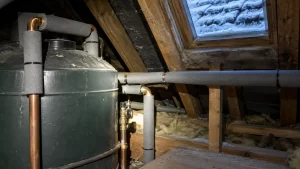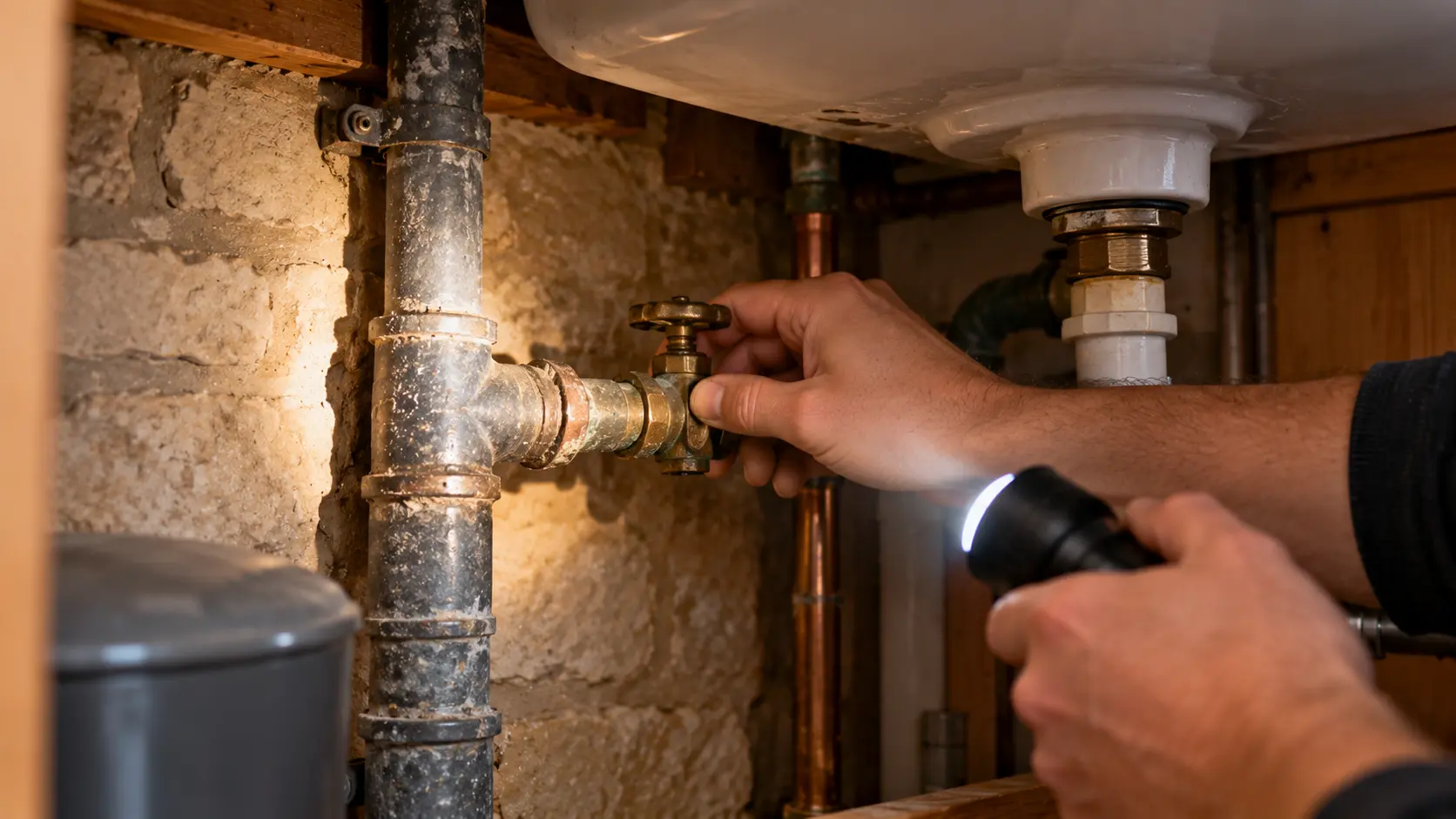
Older homes commonly suffer from outdated pipe materials (including lead or galvanised steel), low water pressure, noisy or banging pipes, slow or blocked drains, seized stopcocks, and slow leaks from ageing joints. Most are manageable once identified, but some, particularly lead pipework, are worth replacing rather than patching.
A plumber can survey an older system and prioritise what needs doing now and what can wait. Our plumbing page explains the work we cover.
Old pipe materials
Lead pipes
Homes built before the 1970s may still have lead supply pipes, often where the water main enters the house. Lead can dissolve into drinking water, so replacement is recommended. Signs include dull grey pipes that are soft and don’t ring when tapped.
Galvanised steel
Common in some older properties, galvanised pipes corrode internally over time, reducing flow and causing discoloured water.
Low water pressure
Causes in older homes include:
- Narrow or corroded supply pipes
- A partly closed or seized stopcock
- Gravity-fed systems with tanks close to the outlets
- Limescale build-up
A plumber can measure pressure and flow and suggest fixes, from replacing the supply pipe to upgrading the hot water system. See our hot water solutions page.
Noisy pipes
- Banging when taps close (water hammer): often loose pipes or high pressure
- Knocking when heating runs: pipes expanding against joists or clips
- Whistling: partly closed valves or restrictions
Securing pipes, fitting arrestors or adjusting valves usually solves it.
Slow drains and blockages
Older drainage can include clay pipes, which can crack or be affected by roots, and narrow waste pipes that clog more easily. Recurring blockages may need a camera survey.
Leaks from ageing joints
Old compression joints, soldered fittings and washers can start weeping after decades. Check under sinks, around the boiler and in airing cupboards for damp or corrosion.
Seized stopcocks
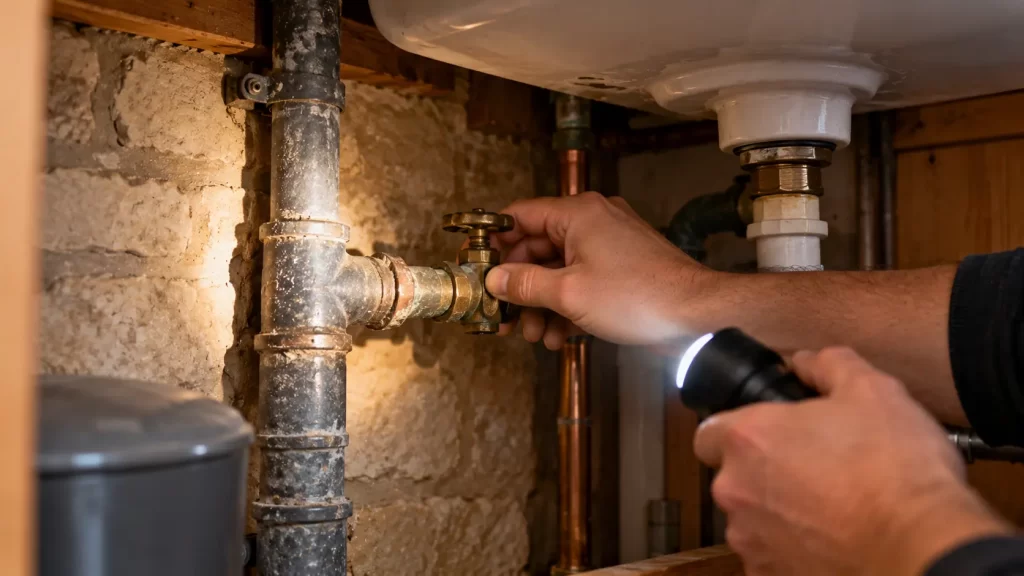
An old stopcock that won’t turn is a real problem in an emergency. Test yours occasionally. If it’s stiff or seized, replace it.
Oxfordshire’s older housing
From Victorian terraces in Oxford to older cottages around Abingdon and Wallingford, the county has a lot of period housing. Many of these homes have plumbing that’s been modified piecemeal over the years, with old and new materials mixed together. A survey helps make sense of what’s there.
Heating problems often sit alongside plumbing ones in older homes. Our post on improving heating efficiency without replacing your boiler covers practical steps.
Frequently asked questions
How do I know if I have lead pipes?
Lead pipes are dull grey, soft, and don’t make a ringing sound when tapped. Scratching gently may reveal a shiny silver surface. A plumber can confirm.
Who is responsible for the supply pipe?
Usually the homeowner is responsible for the pipe from the boundary to the house, and the water company for the pipe up to the boundary. Check with your water supplier.
Is it worth replacing all the old pipework?
Not always. A survey can identify which sections are a risk and which are fine to leave.
Get your plumbing checked
Having plumbing problems in an older home? Call us on 01865 817 611 or get in touch online and we’ll take a look at what’s there.