You open the boiler cupboard and find a puddle on the floor. A boiler usually leaks because of a worn seal or valve, a corroded pipe joint, a pressure relief valve letting water out, or a failing pump or heat exchanger. Turn the boiler off, isolate the water if you can, protect the area, and don’t remove the casing. Then give us a call on 01865 817 611. Our heating engineers cover homes across Oxfordshire and can trace the leak.
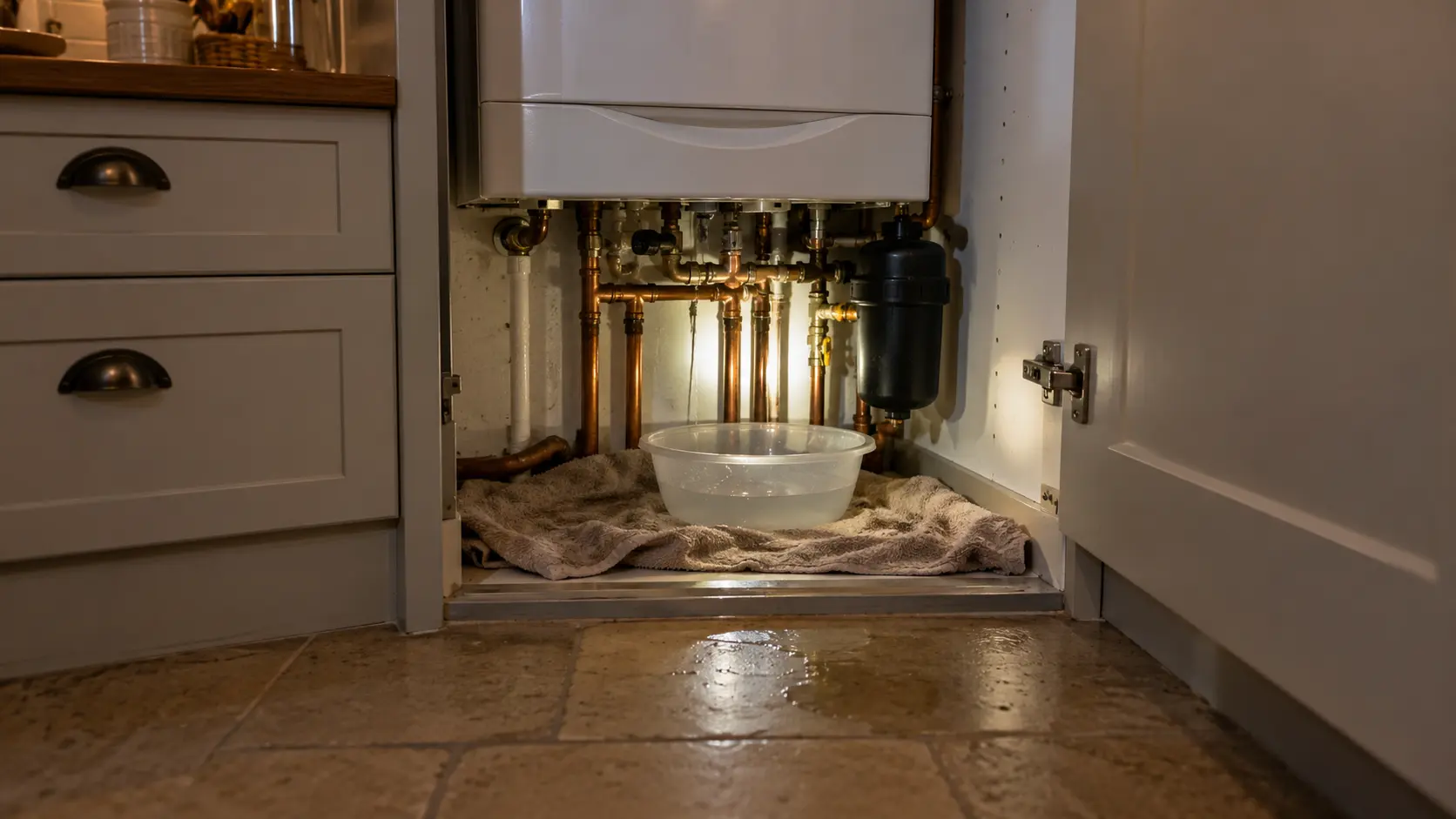
What to do straight away
- Switch the boiler off at the controls and the electrical spur, if you can reach it without touching water
- Turn off the water supply to the boiler using the cold mains valve underneath, or the stopcock
- Catch the water with a bowl or towels and move anything that could be damaged
- Look at the pressure gauge and note the reading
- Take a photo of where the water seems to be coming from
If water is near electrics or coming through a ceiling, switch off the power at the consumer unit if it’s safe to do so.
The most common causes
Pressure relief valve
The pressure relief valve lets water out if the system pressure gets too high. If pressure is running high, or the valve is worn, it can drip or discharge. You’ll often notice water from the copper pipe outside, sometimes with a drip inside too. High pressure usually points to an expansion vessel problem or a filling loop left slightly open.
Seals and valves
Rubber seals and washers in valves, the pump and connections harden and wear over time. A slow drip from underneath the boiler is often one of these.
Corroded pipes and joints
Corrosion builds up inside heating systems, especially older ones or those without enough inhibitor. Joints under the boiler can start to weep. Green or white crusty deposits around fittings are a clue.
Pump leak
The pump moves hot water around the system. If its seal fails, water can drip from inside the boiler casing or on the pump nearby.
Heat exchanger
A leak from the heat exchanger is more serious. It’s usually caused by corrosion and can mean expensive repairs. On an older boiler, it often prompts the repair-or-replace question.
Condensate pipe
Condensing boilers produce water and drain it away through a plastic pipe. A loose or blocked condensate pipe can leak and is sometimes mistaken for a boiler leak.
Checks you can make safely
- Look for drips under the boiler and along visible pipework
- Check the outside discharge pipe for water
- Watch the pressure gauge with the heating off and on
- Check the plastic condensate pipe for loose joints
Don’t remove the boiler casing or tighten anything inside it. Water and electrics don’t mix, and gas components must only be handled by a Gas Safe registered engineer.
Leaks and pressure loss
A leak and a boiler that keeps losing pressure often go together. If you’ve been topping up regularly, the water has to be going somewhere. Our post on why your boiler is losing pressure explains the link and what to look for.
Boiler leaks in older Oxfordshire homes
In older homes around Oxford, Abingdon and Wallingford, original pipework and radiators may have been connected to a newer sealed-system boiler. Higher system pressure can find weak joints that were fine for decades. If your boiler is leaking and the system is old, it’s worth having the whole circuit checked, not just the boiler.
Frequently asked questions
Is a leaking boiler dangerous?
The water itself usually isn’t dangerous, but it can damage the boiler’s electrics, cause corrosion and lead to water damage in your home. If you smell gas at any point, leave the property and call the National Gas Emergency Service on 0800 111 999. Otherwise, switch off the boiler and get it checked.
Can I keep using my boiler if it’s only dripping slightly?
It’s best not to. A small drip can quickly get worse, and water inside the casing can damage electrical parts. If you need heating or hot water urgently, ask an engineer whether it’s safe to run in the short term. Keep an eye on the pressure gauge in the meantime.
Is it worth repairing a leaking boiler?
Often, yes. Seals, valves and pumps are usually repairable at reasonable cost. A leaking heat exchanger on an older boiler is a different story, and replacement can make more sense. An engineer can explain the options once they’ve found the source of the leak.
Get your leak traced
If your boiler is leaking, give us a ring on 01865 817 611 or drop us a message and we’ll come and find out where the water is coming from.