



Owning a period property is a privilege, but heating one can be a different story. From draughty sash windows to thick stone walls and quirky pipe runs, older homes rarely play by modern rules. If you’re weighing up replacement boiler options, it’s worth taking a bit of time to understand what will actually work in your house rather than simply choosing the latest model on the market.
Over the years I’ve worked in Georgian townhouses in central Oxford, Victorian terraces in Abingdon and cottages around Wallingford. They all look beautiful from the outside, but once you lift the floorboards or head into the loft you quickly realise that no two are the same. Choosing the right boiler is about balancing efficiency, practicality and respect for the building itself.
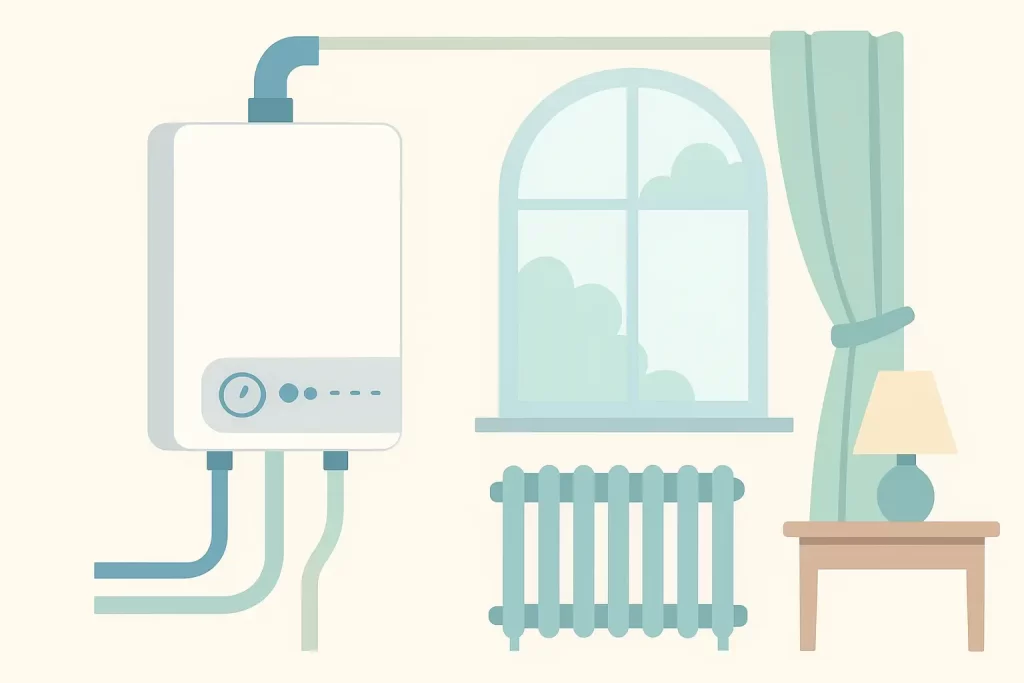
Heating Challenges in Period Homes
Older properties were built at a time when insulation standards were, let’s say, fairly relaxed. Solid brick or stone walls, suspended timber floors and single glazing all mean heat escapes more easily than it would in a modern build.
That affects how hard your boiler has to work. A system that would comfortably heat a newer three bed semi can struggle in a tall Victorian terrace with high ceilings and large bay windows.
Then there’s the pipework. I’ve seen original microbore systems, gravity fed hot water setups and all sorts of add‑ons from the 70s and 80s. Sometimes the boiler isn’t the only thing that needs thinking about. Pump strength, radiator size and water pressure all matter.
Space is another issue. Period homes often have limited cupboard space and awkward loft access. You might not have a neat utility room to hide everything in, so the physical size and location of the boiler become important.
Key Factors When Choosing a Boiler for Older Properties
1. Heat demand and output
The first question I usually get is, “How powerful does it need to be?” The answer depends on the size of the house, ceiling height and how well it’s insulated.
In larger period properties, particularly three storey townhouses, you often need a higher output boiler to cope with the heat loss. Simply matching the output of your old boiler isn’t always right, especially if radiators have been added over time.
2. Water pressure and flow rate
Many older homes have traditional vented systems with tanks in the loft. If you’re thinking about switching to a combi, your incoming mains pressure needs to be checked properly. I’ve had customers keen on freeing up loft space, only to find their mains supply wouldn’t give a decent shower without upgrades.
A quick test at the kitchen tap tells us a lot before any decisions are made.
3. Pipework condition
If the system is full of sludge or very old pipework, installing a high efficiency condensing boiler without cleaning the system first can cause problems. Modern boilers have narrower heat exchangers which don’t tolerate debris well.
Powerflushing and fitting proper magnetic filters are often part of the job in period homes, not optional extras.
4. Aesthetics and listed restrictions
In listed buildings or conservation areas, you may face restrictions on flue positions or external changes. I’ve worked on properties where we had to be very careful about where the plume from a condensing boiler would exit.
This can influence whether a boiler is wall hung in the kitchen, tucked into a cupboard or positioned elsewhere.
Types of Boilers Suitable for Period Homes
Combi boilers
Combi boilers are compact and don’t require a separate hot water cylinder or loft tanks. They suit smaller period cottages or terraces where space is tight and there’s only one bathroom.
They work particularly well where the mains pressure is strong. In a two bed Victorian terrace in Abingdon, for example, a correctly sized combi can free up airing cupboard space and simplify the system.
However, in larger homes with multiple bathrooms, combis can struggle if several outlets are used at once.
System boilers
System boilers work with an unvented hot water cylinder. They’re a good middle ground for bigger period properties that need strong hot water performance without tanks in the loft.
These are common choices for Georgian or Edwardian houses that have been renovated and have upgraded mains supplies. You retain good pressure at multiple showers and the boiler itself is usually compact.
Regular (heat-only) boilers
In some period homes, especially listed buildings, keeping a traditional setup makes sense. A regular boiler with a hot water cylinder and loft tanks can be the most practical solution if the existing pipework suits it.
There’s a temptation to modernise everything, but sometimes working with the original layout avoids unnecessary upheaval.
For a broader look at the differences between boiler types, you might find our article on combi vs system boilers helpful when weighing up options.
Installation Considerations and Final Recommendations
Boiler installation in a period home is rarely just a straight swap. Flue routing can be tricky through thick stone walls. Floorboards may need to come up carefully to protect original features. In some cottages around Wallingford I’ve had to crawl through very low loft spaces to run new pipework.
Good planning makes all the difference. Before choosing a boiler, make sure you:
- Have a proper heat loss assessment
- Check mains water pressure and flow rate
- Assess the condition of existing pipework and radiators
- Consider future plans such as loft conversions or extra bathrooms
Upgrading controls is also worth considering. Smart thermostats and weather compensation can significantly improve efficiency without altering the character of the house.
The right boiler for a period home isn’t about picking the biggest or most expensive model. It’s about choosing one that matches the building, the way you live and the realities of the existing system. When done properly, you’ll notice steadier warmth, better hot water performance and lower running costs without losing any of the charm that made you fall in love with the place.
If you’d like tailored advice based on your specific property, the team at AGM Heating and Plumbing have worked extensively across Oxfordshire’s older homes and understand their quirks inside out.
Need expert advice on upgrading your boiler? Get in touch to get started.

Pingback: Do You Need an Unvented Hot Water Cylinder? | AGM Oxford