When the first hard frost settles over Oxfordshire, it’s easy to forget about the pipes tucked away in the loft or running along an outside wall. To stop your pipes freezing, insulate any pipework in cold spaces, keep the heating ticking over during cold snaps, deal with outside taps before the frost arrives and make sure you know where your stopcock is. A few small jobs now can save a burst pipe later. Our plumbing team can help with anything you’d rather not tackle yourself.
Which pipes are most at risk?
Pipes freeze where cold air reaches them and warm air from the house doesn’t. The usual trouble spots are:
- Pipes and tanks in the loft, especially above the insulation
- Pipes running along or through outside walls
- Garages, outbuildings and utility rooms without heating
- Outside taps and the pipe feeding them
- Pipes under suspended timber floors with airbricks nearby
- Empty rooms or holiday lets where the heating is off
If you’ve had a pipe freeze before, it’s likely to happen again in the same place unless something changes.
Insulate the vulnerable pipes
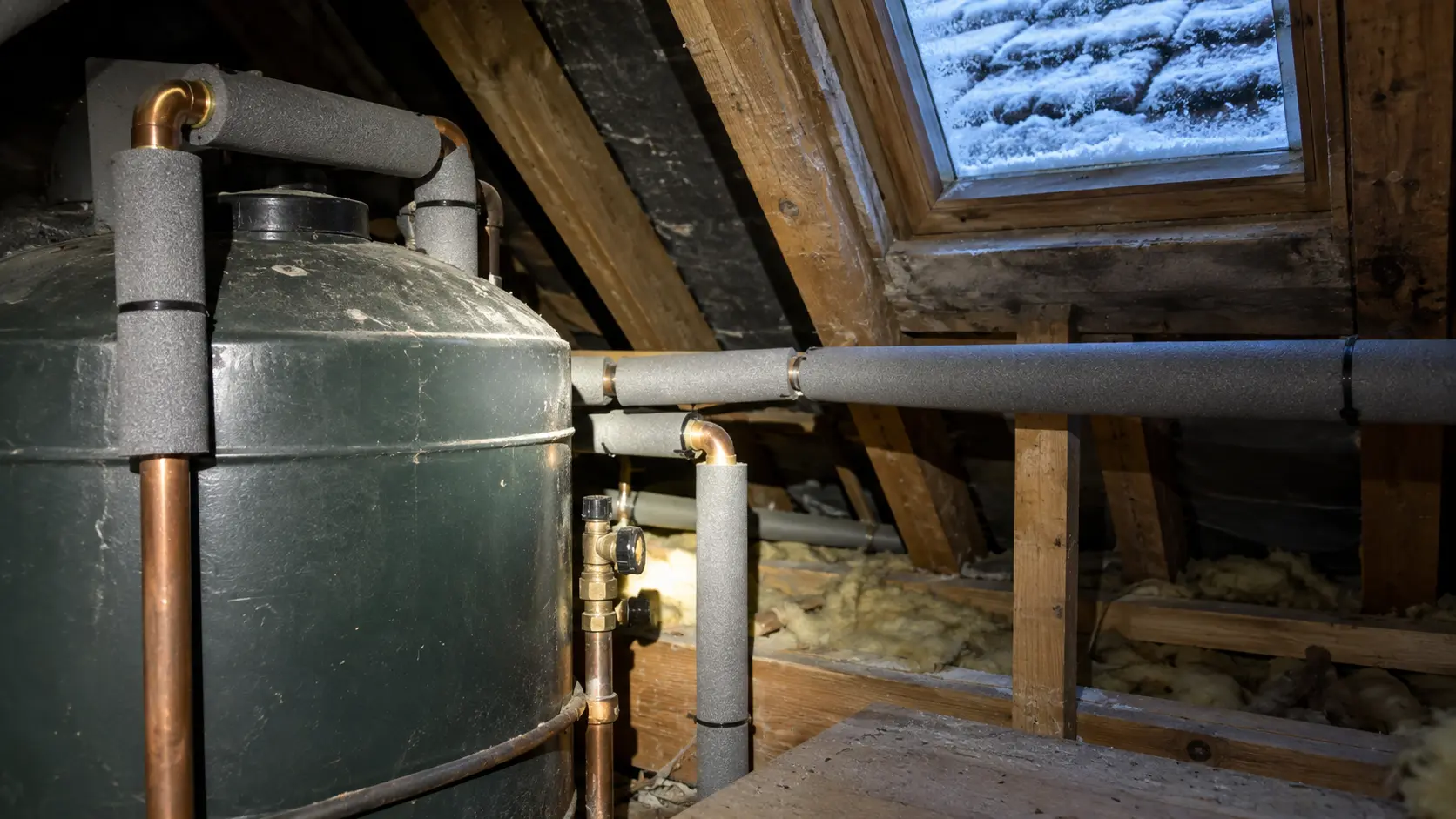
Foam pipe lagging is cheap, widely available and easy to fit on accessible pipes. Choose the right diameter so it fits snugly, and cover bends and joints too, as gaps are where cold gets in.
In the loft:
- Lag every pipe that runs above the insulation
- Insulate the cold water tank, but not underneath it, as warmth rising from the house helps protect it
- Check the tank lid is in place
If pipes are boxed in, under floors or hard to reach, it’s worth asking a plumber to look at them rather than pulling things apart.
Look after outside taps
Outside taps are one of the most common places for a freeze. Before winter:
- Turn off the isolating valve inside the house, if there is one
- Open the outside tap to drain the water left in it
- Leave it open, or fit an insulated tap cover
If your outside tap doesn’t have an isolating valve, a plumber can fit one quickly.
Heating settings for a cold snap
Your heating does a lot to protect your pipes. During freezing weather:
- Keep the heating on low, even when you’re out
- Use the frost setting on your thermostat or boiler if you’re away
- Leave internal doors open so warm air can circulate
- Open the loft hatch slightly in very cold spells
If you’re going away over winter, don’t switch the heating off completely. Some people drain down an empty property instead, but that’s a job for a plumber.
Know where your stopcock is
If a pipe does burst, turning off the water quickly makes all the difference. Find your internal stopcock now. It’s often under the kitchen sink, in a downstairs toilet or where the supply enters the house. Check it turns freely. Older stopcocks can seize, and that’s worth fixing before you need it.
Frozen pipes in older Oxfordshire homes
Many homes around Oxford, Abingdon and Wallingford are period properties with solid walls, suspended floors and pipework that has been added to over the years. Pipes can end up running through cold spots that newer homes avoid. Our post on common plumbing problems in older Oxfordshire homes covers other issues worth checking while you’re at it.
What to do if a pipe freezes
If a tap stops running in freezing weather, a pipe has probably frozen. Turn off the water at the stopcock, open the tap, and warm the pipe gently with a hairdryer on a low setting or a hot water bottle, working from the tap end back. Never use a blowtorch or naked flame. If the pipe has split, or you can’t reach the frozen section, call a plumber.
Frequently asked questions
At what temperature do pipes freeze?
Water freezes at 0°C, but pipes in sheltered spots often survive a light frost. The risk rises during long spells below freezing, especially overnight, and where wind chill reaches pipes on outside walls or in draughty lofts. Insulated pipes in a heated home are far less likely to freeze.
Does keeping the heating on low really help?
Yes. Low background heat keeps the inside of the house above freezing and stops cold spreading to pipes in walls, floors and cupboards. It costs a little to run, but it’s usually far cheaper than repairing a burst pipe and the water damage that comes with it.
Should I drain my water system if I’m away all winter?
For a property left empty through winter, draining down the water and heating can be the safest option. It needs doing properly so that no water is left in low points, and your insurer may have conditions for empty homes. A plumber can drain down and refill the system for you.
Get your pipes ready for winter
Worried about pipes in your loft, garage or an older part of the house? Give us a call on 01865 817 611 or drop us a message and we’ll come and check what needs protecting before the cold sets in.