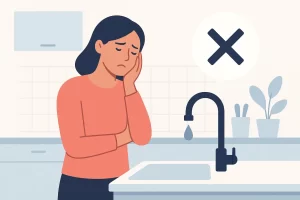
If your boiler has started making odd noises, losing pressure or refusing to fire up altogether, one of the first questions you will ask is, “How much is this going to cost me?” The honest answer is that it depends. I’ve worked in homes across Oxfordshire for years, and no two boiler repairs are ever quite the same.
Whether you need a quick fix or something more involved, the price of professional boiler repair services can vary for several reasons. Understanding what sits behind the cost helps you make better decisions, ask the right questions and avoid spending money you do not need to.
Why Boiler Repair Costs Vary
Boilers are complex pieces of kit. They involve gas, electrics, water pressure and safety devices all working together. When something fails, the root cause is not always obvious at first glance.
A simple pressure top-up and reset is a very different job from tracing an intermittent fault that only appears when the heating has been running for an hour. Time spent diagnosing the issue is often the biggest factor in the final cost.
Type of Boiler and System Complexity
The type of boiler you have makes a real difference.
Combi boilers
Combi boilers are common in places like Didcot and Abingdon, especially in newer estates. They are compact and efficient but packed with components. While they remove the need for a hot water cylinder, they rely heavily on sensors, diverter valves and plate heat exchangers. When one of those fails, parts can be more specialised.
System and regular boilers
Older properties around Wallingford often have system or regular boilers with cylinders and tanks. These setups can be simpler in some respects but involve more pipework, pumps and motorised valves. A fault might not even be in the boiler itself but elsewhere in the system.
The more complex the overall setup, the more time it can take to pinpoint the issue.
If you are based locally, you can also check information specific to your area such as Didcot, Abingdon or Wallingford to see the types of systems commonly worked on nearby.
Common Faults and Cost Differences
Some boiler problems are routine. Others are less so.
Common and usually lower cost repairs include:
- Replacing a faulty thermostat
- Fixing a leaking pressure relief valve
- Replacing an ignition electrode
- Resetting and repressurising the system after a minor leak
More involved and potentially higher cost repairs might include:
- Replacing a main heat exchanger
- Fixing internal wiring or printed circuit boards
- Repairing severe corrosion or sludge damage
- Tracing and repairing hidden leaks under floors
Customers often tell me, “It was fine yesterday.” That may be true, but boilers tend to show symptoms only when a part finally fails. A noisy pump might have been struggling for months.
Parts, Labour and Emergency Call-Out Fees
The overall bill is usually made up of three elements: parts, labour and possibly a call-out charge.
Parts vary widely in price depending on the boiler brand and model. A standard pump for a popular Worcester or Vaillant unit is generally easier to source than a component for an older discontinued model.
Labour covers diagnosis, safe isolation, fitting the new part and full testing afterwards. Gas work must legally be done by a Gas Safe registered engineer. You are paying for training, experience and making sure your home is safe.
If your boiler fails on a freezing Sunday evening in January, an emergency call-out may cost more than a weekday daytime appointment. That is simply down to availability and working outside normal hours.
Age, Condition and Maintenance History
The age of your boiler plays a big part. Most modern boilers are designed to last around 10 to 15 years if looked after properly. As they get older, parts become harder to find and may cost more.
Servicing history is just as important. A boiler that has been serviced annually is usually cleaner inside, with fewer blockages and less wear. One that has been left untouched for years may suffer from sludge build-up, seized components and corrosion.
I have seen cases in Abingdon where a simple repair turned into a longer job because the inside of the boiler was heavily scaled due to poor water quality and no inhibitor in the system. Regular servicing would have kept that in check.
How to Reduce Boiler Repair Costs
While you cannot prevent every breakdown, you can reduce the chances of a big bill.
- Book an annual service to spot worn parts early
- Keep your system topped up to the correct pressure
- Bleed radiators if you notice cold spots
- Install a magnetic filter to reduce sludge
- Address small leaks quickly before they cause wider damage
If something does not sound right, rattling, kettling or frequent resets, get it checked sooner rather than later. Catching a failing pump early is far cheaper than replacing a damaged heat exchanger later.
When to Repair vs Replace
This is a question I get a lot, especially in older properties around Didcot where boilers are reaching the 15 year mark.
If the repair is minor and the boiler is otherwise reliable, repairing it makes sense. But if you are facing repeated breakdowns, expensive parts and rising energy bills, replacement may be the more cost-effective option in the long run.
A good rule of thumb is to weigh up the repair cost against the age and overall condition of the boiler. An honest engineer should explain your options clearly rather than push you either way.
Conclusion and Expert Help
Boiler repair costs are influenced by the type of system you have, the nature of the fault, the parts required and the condition of the unit overall. There is no fixed price because every home and every heating system is different.
The key is early diagnosis and proper maintenance. If you are unsure about a fault or want straightforward advice, it is worth speaking to an experienced local engineer. The team at AGM Heating and Plumbing have worked on systems across Oxfordshire and understand the typical issues found in homes in this area.
For practical advice or to get things sorted properly, you can Book a qualified engineer today and get your heating system checked by someone who knows what they are looking at.