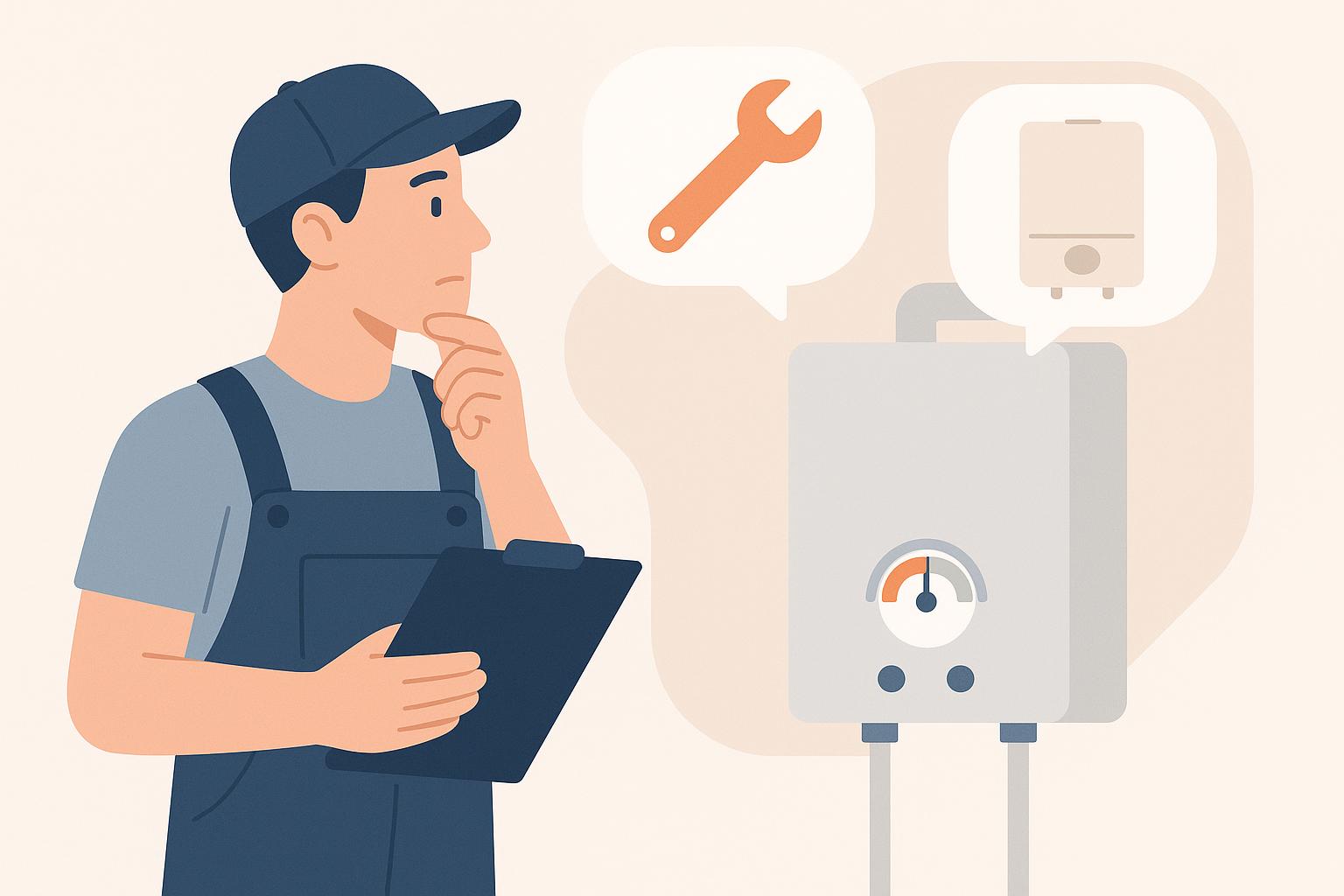
If your boiler’s started playing up, you’re probably asking the same question we hear most weeks: should I repair or replace the boiler? It’s not always a straightforward answer. Some boilers can be sorted with a simple part and a couple of hours’ work. Others are quietly costing you more each month and are one breakdown away from giving up entirely.
As engineers, we see both sides. We’ve walked into homes expecting to quote for a new boiler and fixed the issue for far less. We’ve also seen customers spend good money on repeated repairs when replacing would have made more sense long term. If you’re weighing up the options, here’s an honest guide to help you decide.
When Repairing Your Boiler Makes Sense
Your boiler is under 8 to 10 years old
Modern condensing boilers are designed to last around 10 to 15 years when properly maintained. If yours is less than 10 years old and has generally been reliable, a repair is often the sensible route. Most faults we see in younger boilers are isolated issues rather than signs of overall failure.
Common examples include a faulty diverter valve, a worn pump, or a pressure issue caused by a small leak somewhere else in the system. These can usually be resolved without replacing the whole unit.
It’s the first significant breakdown
If this is the first time your boiler has let you down, that’s a good sign. One breakdown doesn’t mean the appliance is finished. We often advise customers not to panic after a single fault, especially if the boiler has been serviced annually.
The repair cost is reasonable compared to replacement
A useful rule of thumb is to compare the repair cost with the price of a new boiler. While we’d always give a clear quote based on your property, if a repair is a small fraction of the replacement cost and the rest of the boiler is in good condition, it’s often worth doing.
For instance, replacing a fan or pressure sensor on an otherwise healthy boiler is very different to replacing a cracked heat exchanger in an ageing unit.
Signs It Might Be Time to Replace
It’s over 12 to 15 years old
We still come across boilers in Didcot and the surrounding villages that are 15 to 20 years old. Credit to them, they’ve done well. But efficiency and reliability drop off with age. Parts become harder to source and labour costs rise because repairs take longer.
If your boiler is in that age bracket and starting to show problems, it may be more sensible to replace rather than keep patching it up.
You’re calling out an engineer every year
This is one of the biggest signs. If you’re budgeting for annual callouts on top of your servicing, you have to ask whether it’s time to cut your losses. We’ve had customers in Wallingford who kept repairing an older system because each fix seemed manageable. After the third or fourth visit in two years, the total spend wasn’t far off a decent contribution towards a new boiler.
Your energy bills are climbing
Older boilers are much less efficient than modern A-rated models. If your gas usage seems higher than you’d expect and your boiler is ageing, replacement can make a noticeable difference. Especially in larger family homes where the heating is on for longer periods.
Difficulty getting parts
Manufacturers eventually stop producing certain components. When we start having to hunt around for discontinued parts or consider refurbished components, it’s often a sign the boiler is reaching the end of its practical life.
You’re renovating or extending
If you’re updating your kitchen, adding a bathroom, or converting the loft, it’s worth reviewing your heating setup. An undersized or outdated boiler may struggle with increased demand. In these cases, customers often decide to replace the boiler as part of the wider project rather than wait for future problems.
Cost Comparison: Repair or Replace Boiler?
Cost is understandably the main factor for most homeowners. There’s no point pretending otherwise. The decision to repair or replace boiler systems usually comes down to short-term spend versus long-term value.
A straightforward repair might cost a few hundred pounds depending on the fault. A full boiler replacement is typically several thousand once you factor in the unit, labour, system flush and any controls upgrades.
The key question is this: will spending on a repair put you back in a stable position for a few more years, or are you simply postponing the inevitable?
We often explain it like repairing a car. Replacing brake pads on a five-year-old car makes sense. Replacing the engine on a car that’s already done 200,000 miles is a different conversation.
There’s also efficiency to think about. A newer boiler combined with proper heating controls can lower monthly bills. Over time that helps offset the upfront cost. On the other hand, if your current boiler works well and only needs a minor fix, replacing it solely for efficiency might not stack up immediately.
One thing we always stress is to avoid knee-jerk decisions during winter breakdowns. When there’s no hot water and the house is freezing, it’s easy to feel pressured. A proper assessment from a trusted engineer gives you options rather than forcing a rushed choice.
Getting Clear, Honest Advice
If you’re unsure whether to repair or replace your boiler, the best step is a proper on-site assessment. We look at the boiler’s age, condition, service history and how it’s coping with your household’s demand. We also ask practical questions. Has it been reliable until now? Are you planning any home improvements? Are you staying in the property long term?
Across Abingdon, Didcot and Wallingford, we’ve helped homeowners make both decisions for the right reasons. At Plumbing and Heating Oxford, we’re not interested in pushing replacements where a sensible repair will do. Equally, we won’t recommend pouring money into a system that’s clearly on its last legs. Plumbing and Heating Oxford is here to give straightforward advice based on what actually makes sense for your home.
If your boiler’s been playing up and you’re weighing your options, don’t guess. Get proper guidance from someone who’s seen it all before.