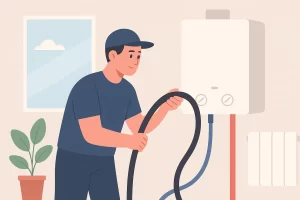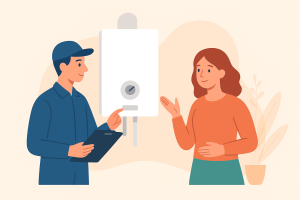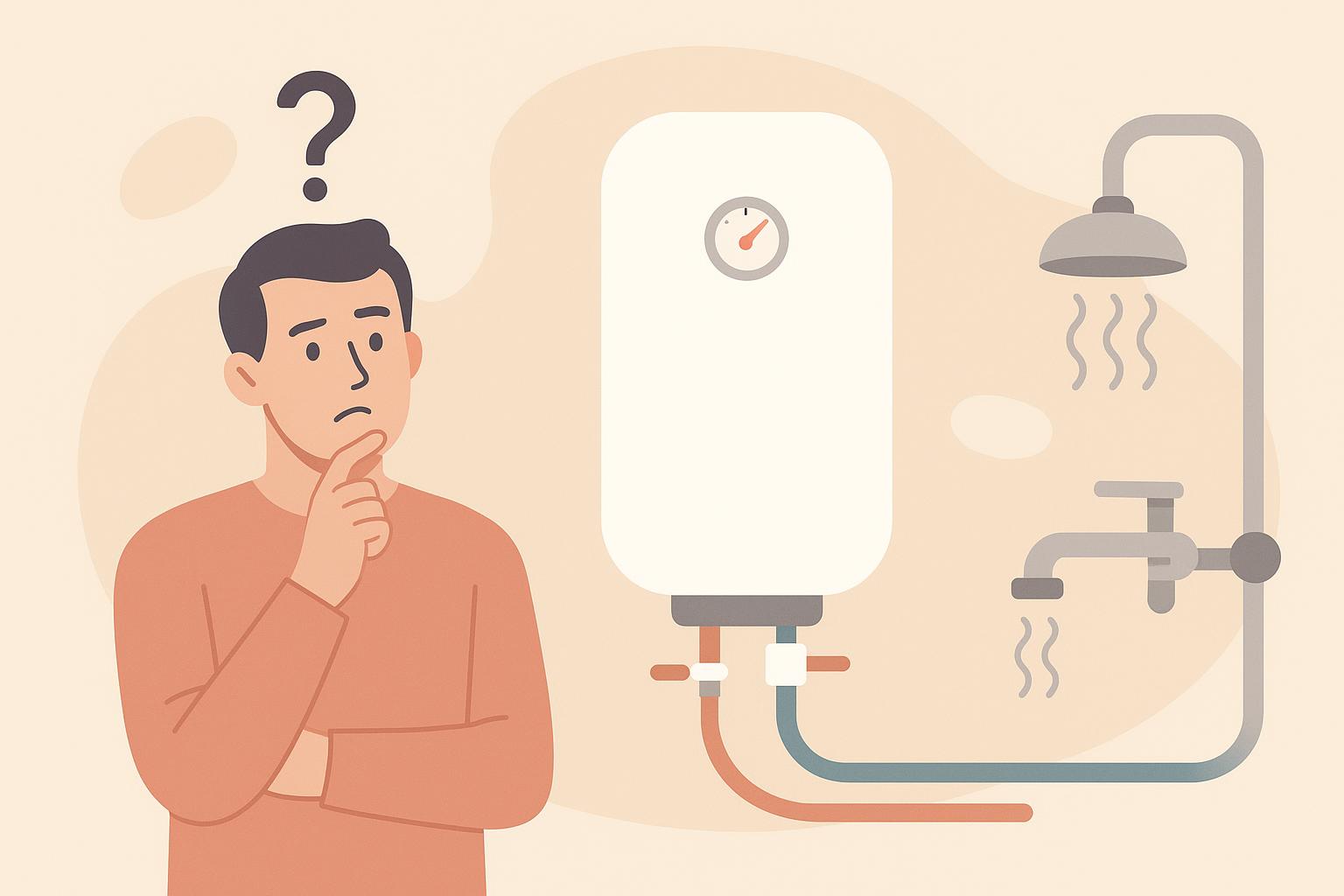
If you’ve ever been halfway through a shower and the hot water suddenly turns cold, you’ll know how frustrating it is. It’s one of the most common calls we get. Families growing, bathrooms added, teenagers taking longer showers than anyone thought possible. Suddenly the system that was fine five years ago just isn’t keeping up.
If you need more hot water solutions, the good news is there are options. The key is understanding why you’re running out in the first place. From there, we can look at what makes the most practical sense for your home.
Common Causes of Low Hot Water
Before rushing into upgrades, it’s always worth checking what’s actually causing the problem. Not every issue means you need a new boiler or cylinder.
Your cylinder is too small
In many older homes around Didcot and the surrounding villages, we still see 90 or 120 litre cylinders. They were perfectly adequate when there was one bathroom and maybe two occupants. Add in a rainfall shower and a couple of children and suddenly it’s nowhere near enough.
A standard bath can use 80 litres on its own. If the cylinder is only 120 litres, you can see how quickly that disappears.
Your boiler can’t keep up
With combi boilers, there’s no stored hot water. The boiler heats it on demand. That works well until two showers run at the same time or someone turns on the kitchen tap while the shower’s going. If the boiler output is too small, you’ll feel the temperature fluctuate.
I’ve lost count of the number of times I’ve been asked, “Can’t we just turn the boiler up?” Unfortunately, if the boiler is already at full capacity, there’s not much more to give.
Sludge or ageing components
Sometimes the issue isn’t size but efficiency. An older cylinder full of scale or a boiler struggling with a partially blocked plate heat exchanger won’t perform the way it should. In hard water areas around Oxfordshire, that’s not uncommon.
Cylinders and Upgrades
If you have a traditional system with a hot water cylinder, upgrading it can make a big difference.
Fitting a larger unvented cylinder
This is often the most straightforward solution if you genuinely need more hot water solutions. Modern unvented cylinders are far more efficient than older vented ones and deliver strong pressure to multiple outlets.
For example, moving from a 120 litre vented cylinder to a 210 litre unvented cylinder can transform how a household operates. Showers stay hot longer and there’s enough stored water for back to back use.
Of course, we’d check loft space, airing cupboard dimensions and incoming mains pressure first. There’s no point installing a large cylinder if the mains can’t support it properly.
Adding a second cylinder
In bigger properties, particularly those that have been extended, it can sometimes make sense to install an additional cylinder rather than relying on one central store. It’s not the right answer for every house but in certain layouts it works well.
Improving insulation and controls
Sometimes the fix is simpler than people expect. Better cylinder insulation, timed heating controls or adjusting the thermostat can improve performance. I’ve visited homes where the cylinder stat was set too low and they’d been unknowingly limiting their own supply.
Boiler Options
If your issue centres around the boiler, the solution might involve upgrading or changing the type of system entirely.
Upgrading to a higher output combi
Combi boilers come in different outputs, typically between 24kW and 40kW for domestic properties. A small 24kW combi in a three bathroom house is going to struggle.
Moving to a 35kW or 40kW model can significantly improve hot water flow rate. That means better showers and less temperature drop when someone opens another tap. We always calculate demand properly rather than guessing. Gas pipe sizing is something we carefully check too, as older pipework can restrict output.
Switching from combi to system boiler
If multiple bathrooms need to run at once, a combi might not be the best long term solution. A system boiler paired with a large unvented cylinder gives you stored hot water and strong pressure.
This setup suits busy households where shower timing is less predictable. It also provides a bit more resilience during peak demand.
Considering alternative solutions
For some properties, particularly where gas supply is limited, we might talk through options like solar thermal support or high recovery cylinders. It depends entirely on the house and how it’s used.
There isn’t a single best system. What works brilliantly in a four bed family home may be overkill for a two bed terrace.
If you’re regularly running out of hot water, don’t just put up with it or assume you need a full replacement. The right solution depends on your current set up, your budget and how your household actually uses water day to day.
We’ve helped homeowners across Abingdon, Didcot and Wallingford work out practical answers that genuinely solve the problem rather than masking it. If you think you need more hot water solutions, have a proper chat with a local engineer who will assess the whole system. At Plumbing and Heating Oxford, we take the time to explain what’s happening and why. Plumbing and Heating Oxford is here to make sure your hot water keeps up with your home. Contact us for advice